California move over law accident claims matter more in 2026 because California expanded its roadside safety rule in a way many drivers still do not fully understand. For years, most people connected move-over duties to police cars, ambulances, fire trucks, and tow trucks. That is no longer the full picture. Now the rule also reaches other stationary vehicles that display hazard lights or another warning device, and that change can shape fault arguments after a serious crash.
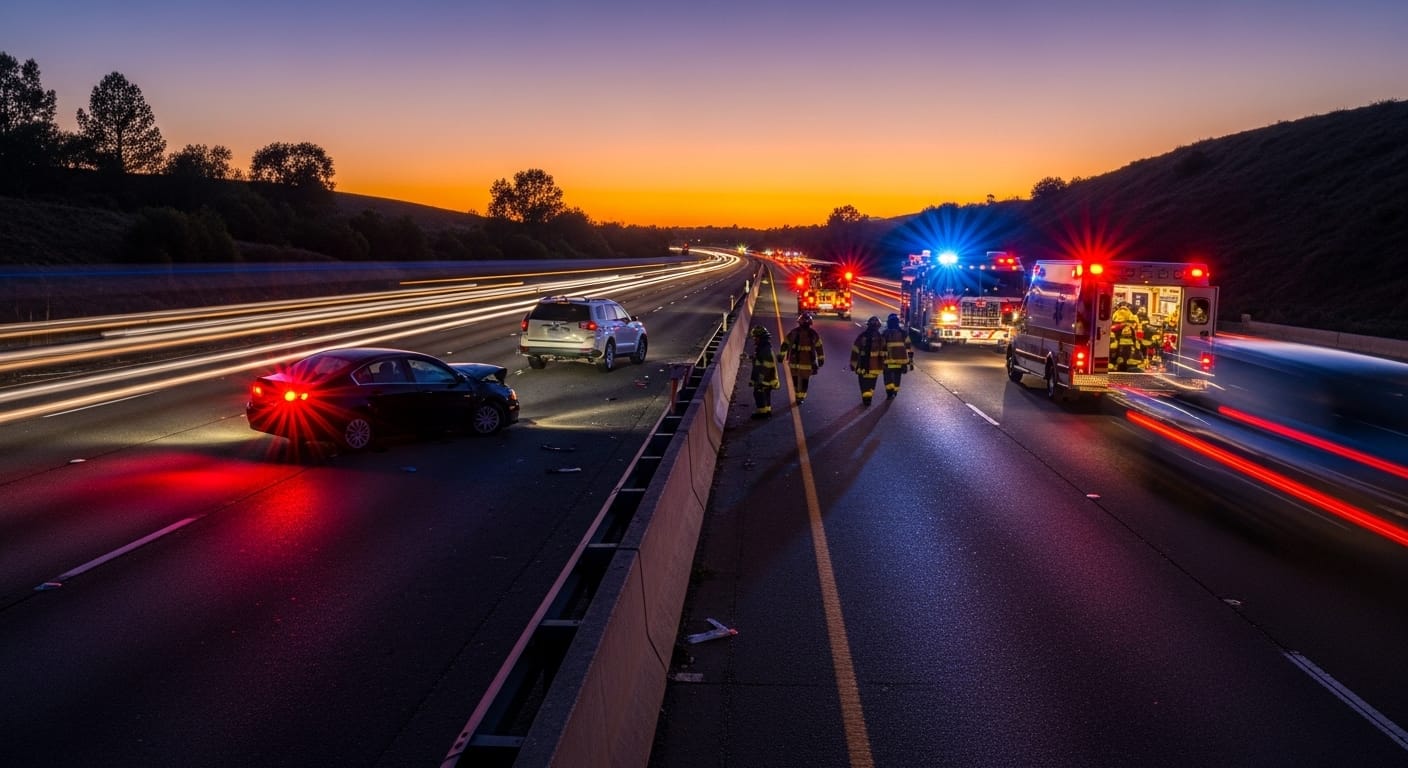
This matters because roadside crashes are often brutal. A driver may pull over with a flat tire. A family may stop on the shoulder after smoke starts coming from the engine. A rideshare driver may stop with hazards on after a minor collision. A stranded motorist may stand beside the car for only a few seconds and still suffer catastrophic injuries when another vehicle fails to slow down or change lanes. In those cases, the legal fight no longer turns only on speed or distraction. It can also turn on a clear roadside duty that many drivers ignored.
That is why California move over law accident claims deserve their own discussion. These cases can involve freeway shoulder impacts, secondary crashes after breakdowns, roadside assistance scenes, and collisions with stopped vehicles that should have been easy to recognize. They can also involve comparative fault arguments, insurance disputes, and fast-moving evidence problems that become harder to fix once the scene disappears.
This topic also fits naturally with your existing content. Readers who want more context can continue to California Distracted Driving Accident Claims in 2026, California Rideshare Accident Claims in 2026, Government Vehicle Accidents in California, and Understanding Comparative Negligence: How It Affects Your Car Accident Case.
Why California Move Over Law Accident Claims Matter More in 2026
California move over law accident claims matter more now because the law gives stranded drivers and passengers a stronger safety framework than before. The old public understanding was too narrow. Many drivers believed they only had to move over for official emergency vehicles. The 2026 expansion makes the roadside duty broader and easier to discuss in injury claims.
What changed in practical terms
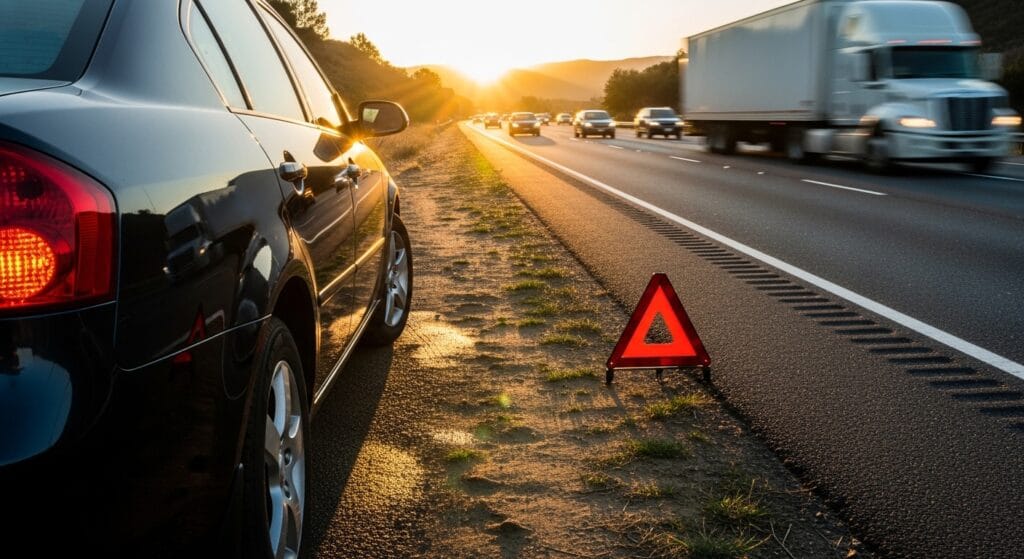
The key issue is visibility and response. If a vehicle is stationary and displaying hazard lights or another warning device, approaching drivers may need to move over when safe and practical. If they cannot safely change lanes, they may need to slow down and use caution. That sounds basic, but it matters a lot after a collision because it gives victims a clearer way to explain why the danger should have been obvious before impact.
Why hazard lights now matter more in injury cases
Hazard lights do not make a stopped vehicle immune from danger, and they do not excuse every decision made by the stranded driver. But they can become powerful evidence. If the disabled vehicle had hazards on, reflective devices out, or another warning sign visible from the roadway, the defense may have a harder time arguing that the scene gave no warning. In other words, the claim can shift from “the crash happened too fast to avoid” to “the approaching driver had a clear reason to slow down or move over and failed to do it.”
Why roadside crashes are often worse than people expect
Roadside crashes often lead to severe injuries because the victim may be partly outside the vehicle, standing near traffic, or caught in a secondary impact. A slow-speed shoulder contact can become a life-changing event when a person has almost no protection. Broken bones, head trauma, spinal injuries, crush injuries, and wrongful death cases all become much more likely when someone is exposed beside a disabled vehicle.
Why drivers still get this wrong
Many drivers react too late. Some keep their speed and only drift over at the last second. Others stare at a phone, follow too closely, or treat the shoulder as part of normal traffic flow. Some drivers also assume hazard lights only mean “car problem” and not “human danger.” That mindset is exactly why these cases matter. A disabled car on the side of the road often means a person is nearby, and the law now reflects that more clearly.
How Fault and Compensation Work in California Move Over Law Accident Claims
Most California move over law accident claims still turn on ordinary negligence, comparative fault, and damages. The injured person still has to prove what the approaching driver did wrong and how that conduct caused the injury. But the expanded roadside rule can strengthen that argument. A plaintiff may now frame the case not just as speeding, drifting, or distracted driving, but as a failure to react properly to a visible roadside hazard.
Who may be at fault after a roadside crash
The passing driver is often the main defendant, but not always the only one. A commercial driver may have caused the impact. A rideshare vehicle may have stopped or merged dangerously near the scene. Another driver may have forced the striking vehicle toward the shoulder. A public vehicle or highway service vehicle may also be involved, which can trigger very different claim deadlines and procedures. In some cases, the stranded driver’s own choices will also come under review if they stopped in an unusually dangerous location when safer options existed.
That does not mean the stranded driver loses. California comparative negligence rules still allow a claim even if the victim shares part of the blame. The real question is whether the approaching driver acted reasonably after seeing, or having the opportunity to see, a stopped vehicle with visible warning signals.
What evidence can make or break the claim
These cases are won or lost through evidence. Photos of hazard lights, cones, reflective triangles, lane width, shoulder space, skid marks, debris patterns, and final vehicle positions can change the outcome. Dashcam footage may be even more valuable. Witness statements can help show speed, distraction, or whether the striking driver had room to move over. Phone records, vehicle data, and scene measurements can also matter. If the crash involved a government or highway service vehicle, preserving records early becomes even more important.
Why insurance fights can get ugly fast
Insurance companies often try to shift blame in roadside cases. They may argue the stopped vehicle was too close to traffic, the victim stepped out at the wrong time, or the location was too dangerous to stop at all. Sometimes those points carry some weight. But they do not erase the approaching driver’s duty to react safely to a visible roadside danger. That is why the facts matter so much. A weak record lets the insurer define the case. A strong record forces the insurer to deal with what actually happened.
Why comparative negligence matters here
Comparative negligence often becomes the battleground in these claims. The defense may admit some fault but try to reduce the payout by saying the injured person made a poor roadside choice. That can affect settlement value in a big way. It is also why internal links to your comparative-negligence article and your uninsured-motorist content make sense. Many readers dealing with a roadside collision will also need help understanding partial fault and backup coverage issues.
What damages may be available
When fault is proven, damages may include emergency treatment, ambulance bills, surgery, hospitalization, follow-up care, rehabilitation, lost wages, reduced earning capacity, property damage, pain and suffering, and long-term disability. In severe cases, victims may also need future care, home modifications, or support for permanent physical limitations. These crashes often look smaller than they are at first, especially when the vehicle damage seems modest but the person outside the vehicle takes the full force of the impact.
What victims should do right away
Get medical care first. Then preserve everything. Take photos before the scene changes. Save dashcam files, witness names, repair invoices, tow records, and medical records. Do not assume the police report will capture every important detail. If the other driver has little or no insurance, check whether uninsured or underinsured motorist coverage may help. Most of all, do not let an insurance adjuster frame the crash before the evidence does.
The bottom line is simple. California move over law accident claims matter more in 2026 because California made the roadside duty broader and clearer. Not every roadside crash becomes an automatic win for the injured person. But many victims now have a stronger way to show that the other driver should have slowed down, moved over, or used far more caution than they did. On crowded California roads, that can make a real difference in how fault is argued and how compensation gets valued.
For official background, readers can review the California DMV’s 2026 new laws summary.