

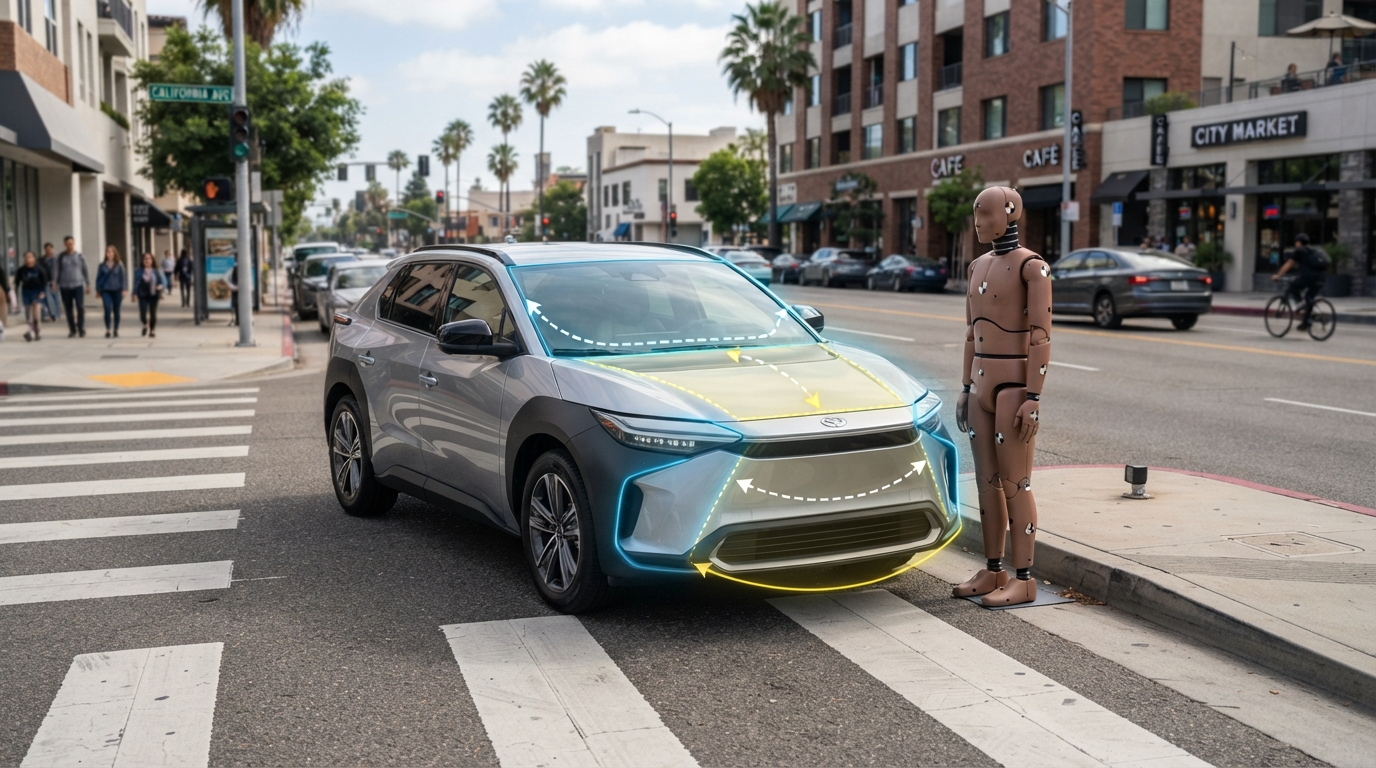
Pedestrian safety ratings became a new part of federal vehicle safety information in 2026. On September 18, the National Highway Traffic Safety Administration released its first pedestrian protection assessments for model year 2027 vehicles under the agency’s 5-Star Safety Ratings program.
The new results measure how vehicle design may affect injuries to a pedestrian’s head, hips, legs, and knees during a collision. NHTSA says 102 vehicle models from 10 manufacturers met the new performance criteria in the first round of published results.
For California accident victims, these ratings do not decide fault. A driver can still be negligent for speeding, failing to yield, driving distracted, or violating another traffic rule. However, the new information may become relevant when investigators examine how vehicle design, pedestrian automatic emergency braking, or another safety system affected the severity of an injury.
This article explains what the new pedestrian ratings actually measure, what they do not prove, and what evidence injured pedestrians should preserve after a serious crash.
How the New Pedestrian Safety Ratings Work
NHTSA added pedestrian crashworthiness information to its New Car Assessment Program for model year 2027 vehicles. The familiar program already gives consumers information about frontal, side, and rollover crash performance. It also evaluates several crash-avoidance technologies.
The new pedestrian assessment focuses on what happens when the front of a vehicle strikes a person. NHTSA evaluates several areas of the vehicle that commonly contact the body during a pedestrian collision.
The agency then reports whether a tested or submitted vehicle configuration meets the pedestrian protection performance criteria. A vehicle’s NHTSA ratings page can show that the result meets the criteria, does not meet them, is pending, or is not available.
The Tests Focus on Head, Hip, Leg, and Knee Injury Risk
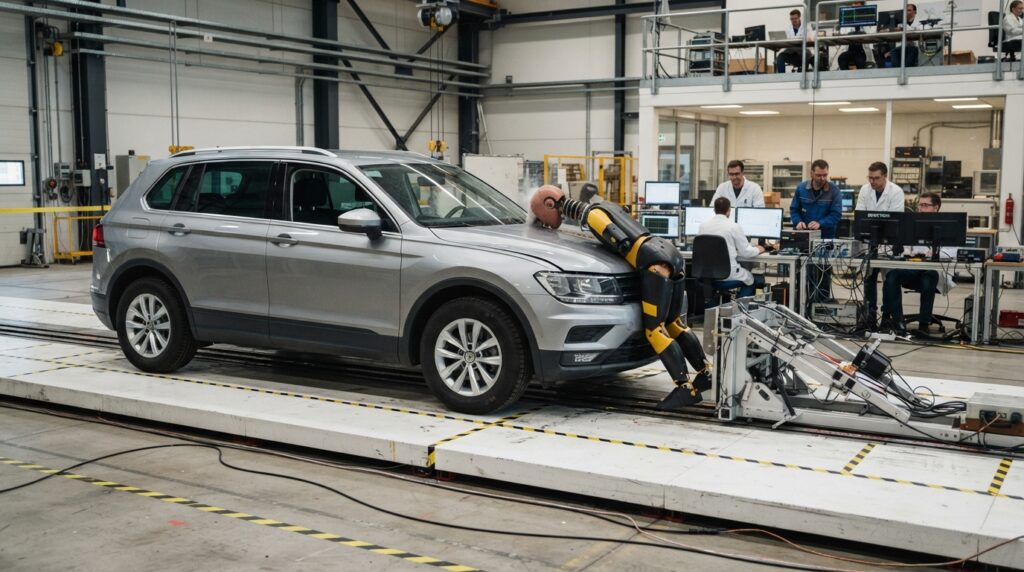
NHTSA uses three main impact scenarios. Child and adult headforms strike areas around the hood and windshield. An upper-leg impactor tests the leading edge of the hood. A lower-limb impactor evaluates the bumper area.
These tests are designed to measure injury risk from the physical shape and energy-absorbing characteristics of the vehicle. A hood that provides more space above hard engine components, for example, may manage impact forces differently from a rigid surface with little clearance.
The bumper and hood edge can also influence forces on the legs and hips. Those details matter because pedestrian collisions often produce severe orthopedic and head injuries even when vehicle occupants suffer little or no harm.
NHTSA’s first published round identified 102 model year 2027 vehicles from 10 manufacturers that met the new criteria. That does not mean every vehicle missing from the list failed. Testing and data review remain ongoing, and some ratings may still appear as pending or unavailable.
A Passing Rating Does Not Mean a Vehicle Cannot Seriously Injure a Pedestrian
A pedestrian safety rating should not be read as a guarantee of safety. Vehicle speed, impact angle, pedestrian height, road conditions, braking, and many other factors affect injury severity.
A vehicle that meets NHTSA’s criteria can still cause catastrophic injuries in a high-speed crash. Likewise, a rating does not excuse a driver who fails to stop for a pedestrian in a crosswalk.
The new ratings are better understood as another source of information about vehicle design. They help consumers compare how vehicles perform under standardized pedestrian impact tests.
For a real accident claim, investigators still need evidence from the specific collision. Our guide to California school zone accident claims in 2026 explains how speed, visibility, signs, and child pedestrian injuries can shape fault analysis.
Pedestrian Crashworthiness and Automatic Emergency Braking Are Different
NHTSA also evaluates pedestrian automatic emergency braking, commonly called PAEB. That technology attempts to detect pedestrians and apply the brakes before or during an emergency.
Pedestrian crashworthiness measures something different. It looks at how the vehicle’s structure affects a person after contact occurs.
A vehicle could perform well in one area and less well in another. For example, a strong braking system may reduce the chance of impact, while hood or bumper design affects the injury forces if a collision still occurs.
This distinction matters after an accident. Investigators may need to ask both whether the driver or vehicle had a reasonable chance to avoid the crash and whether the vehicle’s design or safety systems affected the resulting injuries.
New Safety Ratings May Add Context to Accident Investigations
Most pedestrian accident claims still focus on negligence. Did the driver yield? Was the driver speeding? Was the pedestrian in a crosswalk? Did distraction, impairment, or poor visibility contribute?
The new federal ratings do not replace those questions. They can add another layer when the injuries appear unusually severe or when a safety feature becomes part of the dispute.
For example, a newer vehicle may have pedestrian automatic emergency braking. If the system did not activate before a crash, investigators may examine vehicle logs, warning messages, camera data, and the conditions at the scene.
Similarly, if a claim raises concerns about a vehicle component or design, the vehicle itself may need to be preserved before repairs or salvage change the evidence.
Vehicle Design Evidence Does Not Automatically Create Product Liability
A low or unavailable pedestrian rating does not automatically mean a vehicle is defective. Federal testing provides comparative safety information, not an automatic legal conclusion about liability.
A product-related claim generally needs stronger evidence. Investigators may need to identify a specific design problem, manufacturing issue, failed safety system, or other defect that contributed to the injury.
That is why accident victims should avoid making assumptions based only on a ratings page. A careful investigation may include engineering analysis, vehicle inspection, recall history, software data, and medical evidence.
Our article on defective replacement airbags and auto accident claims shows how a vehicle-safety issue can create a second layer of investigation beyond ordinary driver negligence.
What Pedestrians Should Preserve After a Serious California Crash
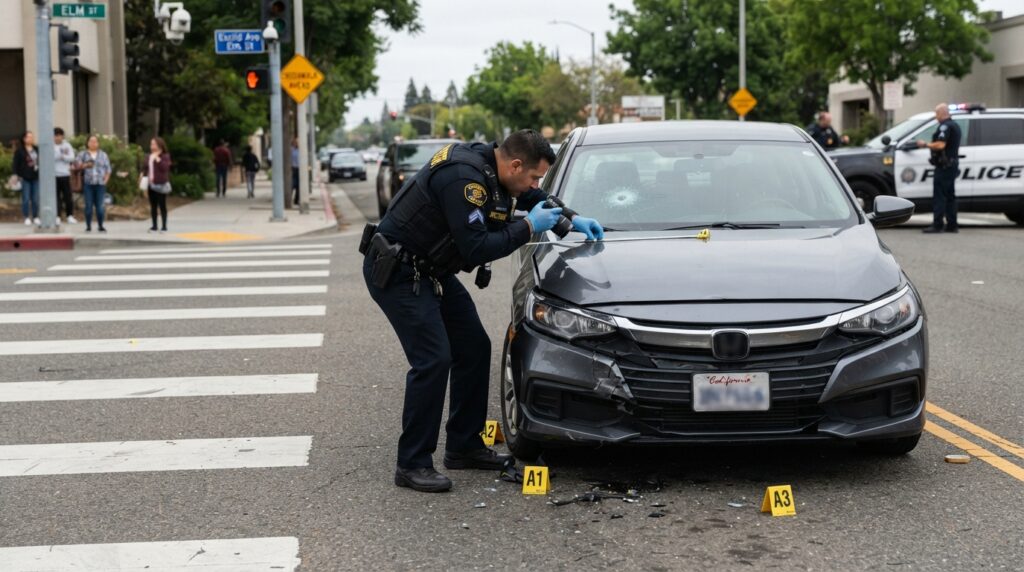
Medical care comes first after a pedestrian collision. Even a person who remains conscious may have a head injury, internal injury, fracture, spinal injury, or soft-tissue damage that needs prompt evaluation.
After immediate medical needs are addressed, preserve evidence quickly. Pedestrian crashes often occur in busy areas where the physical scene changes within minutes.
Photograph the crosswalk, roadway, traffic signals, signs, vehicle damage, debris, lighting conditions, and any visible skid or tire marks. Save the driver’s information and the police report number.
Video, Vehicle Data, and Medical Records Can Help Reconstruct the Crash
Look for nearby cameras. Businesses, homes, buses, parking structures, traffic systems, and other vehicles may have recorded the collision. Request preservation quickly because some systems overwrite old footage.
Dashcam video can show vehicle speed, pedestrian location, traffic signals, and driver reaction. Event data recorders may provide information about speed, braking, and other vehicle inputs shortly before impact.
Modern vehicles may also store information from advanced driver-assistance systems. If pedestrian automatic emergency braking or another safety feature becomes relevant, software and sensor data may deserve review.
Distracted driving evidence can matter too. Our guide to California distracted driving accident claims in 2026 explains why phone activity, navigation use, video, and infotainment data may become important.
Preserve the Vehicle When Safety Technology or Design Is in Dispute
If a serious case raises questions about braking technology, sensors, recalls, or vehicle design, the damaged vehicle may contain critical evidence.
A routine insurance process can move a vehicle quickly to a repair shop or salvage yard. Repairs may replace sensors, update software, erase diagnostic information, or remove damaged components.
When appropriate, document the vehicle before major work begins. Photograph the front bumper, hood, windshield, lights, cameras, sensors, and impact areas. Keep repair estimates and recall information.
Do not attempt to access vehicle electronics yourself. Qualified investigators can determine whether relevant data exists and how to preserve it safely.
The new federal pedestrian safety ratings give consumers and investigators another source of information in 2026. They show how model year 2027 vehicles perform under standardized tests involving pedestrian head and leg impacts.
They do not decide who caused a crash, and they do not guarantee that a vehicle will prevent serious injury. Driver behavior, speed, road design, visibility, pedestrian movement, and safety technology still matter.
For injured pedestrians, the practical steps remain straightforward. Get medical care, preserve video and witness information, document the scene, and avoid losing vehicle evidence when a safety-system or design question may become important.
NHTSA’s new program also gives car buyers a different way to think about safety. Vehicle safety is no longer measured only by how well the people inside the car survive a crash. The 2027 ratings now provide specific information about how the vehicle may affect a person outside it.
You can review the first official results through NHTSA’s 2027 pedestrian safety test announcement.
This article provides general educational information and does not constitute legal advice. Negligence, product liability, insurance coverage, evidence preservation, and filing deadlines depend on the facts of each accident and applicable law.