

Readers researching California multi-car rear-end accident need practical distinctions, reliable sources and a clear next step. The answer often depends on the circumstances, what can be verified and which professional or official instructions apply. This auto accident law guide focuses on the decision points people can actually investigate, rather than promising a universal result.
It is easy to focus on an insurer’s first answer or a single legal term, but the useful questions are more specific: what happened, which rules apply, what evidence survives, and what deadlines are approaching? This guide explains the practical distinctions without claiming that the result of any individual case is predetermined.
Why chain-reaction collisions need a sequence
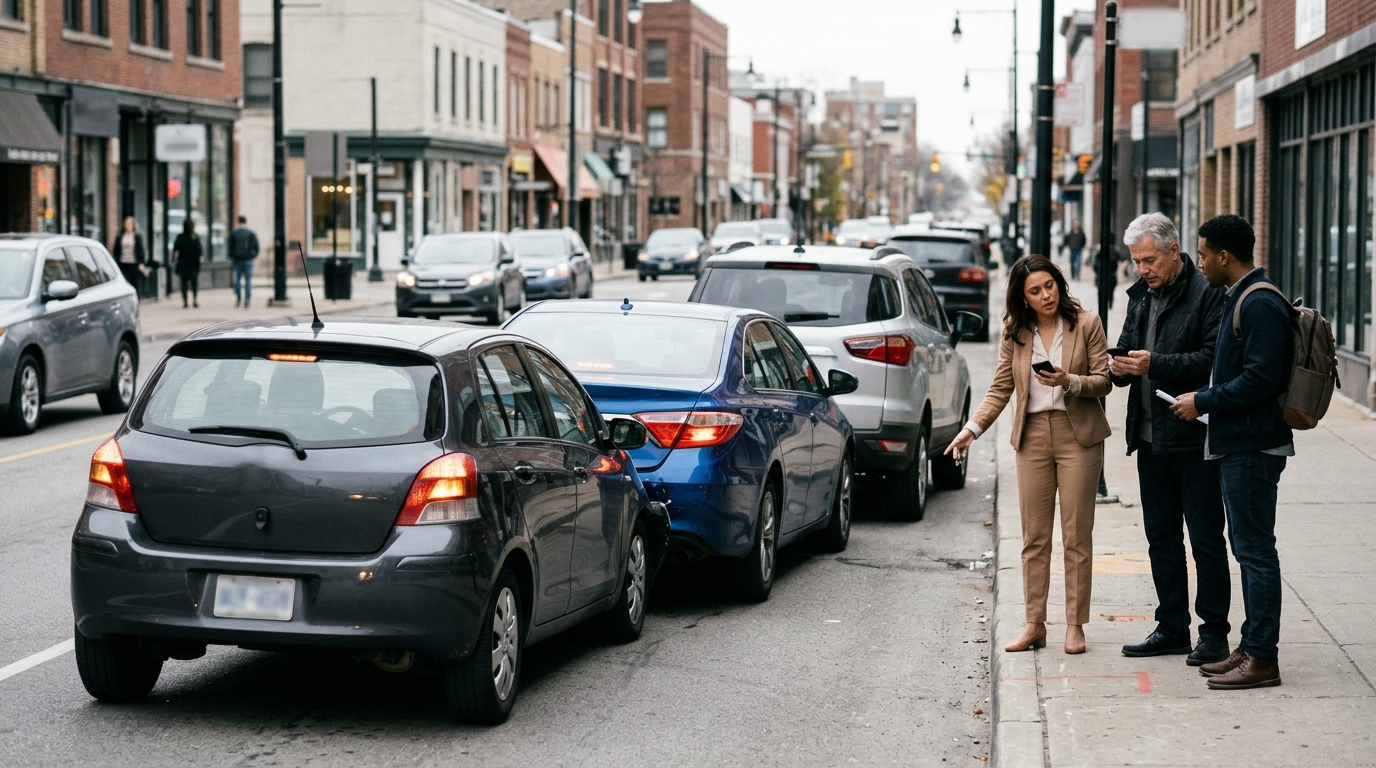
A California multi-car rear-end accident can look straightforward from a distance: several vehicles are damaged in a line. Yet a chain reaction may involve more than one distinct impact, and liability depends on who did what at each stage. A driver who was pushed forward by another collision is not necessarily in the same position as someone who struck a stopped vehicle first. An accurate timeline matters more than a dramatic description. Record what was known on the day, what became clear later, and who supplied each piece of information. An insurance position or police summary is not automatically the final legal finding. Keep originals, preserve uncertainty, and do not guess at missing details. For further context, review Auto Accident Lawyer article archive.
A useful investigation separates vehicle order from impact order. Identify where each car was before braking, which vehicle contacted another first, and whether any driver moved again before the final collision. Driver accounts can conflict because the impacts happen quickly. Preserve statements as individual observations rather than forcing them into one story too early. Before relying on any general rule, check which jurisdiction, deadline, coverage agreement, and type of claim actually applies. A useful article should separate a possible legal theory from proof that its elements are satisfied. A legal professional can review whether exceptions or procedural prerequisites change the analysis.
One impact can cause another

California drivers have duties to maintain reasonable speed and spacing under prevailing conditions. But merely occupying the last position in a damaged line does not mathematically establish responsibility for every injury or vehicle. A careful fault analysis considers braking distance, traffic flow, visibility, road surface and the actual sequence of force transfer. Build a folder containing dated photographs, correspondence, relevant policy pages, receipts, and a simple index. Save originals separately from annotated copies. A consistent record can help an independent reviewer understand the event without assuming that one screenshot or one witness statement tells the entire story.
Separate the first impact from later impacts
Photographs of front and rear damage can suggest contact locations, but they rarely establish exact timing alone. Telematics, onboard camera footage, event data and witness observations may help. Even then, the data needs interpretation with attention to timestamps, sensor limits and preexisting damage. Avoid claiming a crash diagram is conclusive without corroboration. Consider what an opposing explanation would look like. Were there multiple contributing causes, conditions that changed over time, or documents pointing in different directions? Testing a claim against those alternatives produces a more reliable picture than choosing the first explanation that feels intuitively correct.
Look for pre-impact braking and distance
Some injuries arise from a first strike and others from a later secondary impact. Medical records should document symptoms and timing without asking a patient to diagnose which impact caused each condition. Specialists may be needed when causation is disputed. Similarly, repair estimates should note each affected vehicle rather than treating the incident as one undifferentiated claim. Avoid sharing sensitive records publicly or submitting unnecessary personal identifiers through unverified forms. Contact organizations through verified channels, document what was requested, and preserve confirmation numbers. Online resources can explain a process, but only a qualified professional who reviews your facts can advise on a particular case.
A driver who remains stopped after the first impact may still experience a later forceful collision. Review airbag deployment, head-restraint position and seat-belt evidence carefully without making unsupported biomedical conclusions. When injuries are serious, specialized experts may be needed to interpret mechanics.
Mechanical evidence is not a complete timeline
Multiple policies and claims handlers can create confusing communications. Each insurer may argue another vehicle caused the loss. Keep a log of names, claim numbers, dates and positions taken, and avoid signing inconsistent recorded accounts without understanding the questions. Coverage types and deadlines vary; read the policy terms carefully. A single day rarely captures the whole consequence of an accident. Treatment may evolve, repairs may reveal hidden damage, and an employer may need updated work restrictions. Maintain dated records without exaggeration, and do not sign a broad release until the financial and legal implications are understood.
Weather and sudden congestion can explain why a chain reaction developed, but they do not automatically excuse unsafe following distances or inattentiveness. The inquiry is what precautions were reasonable in the actual conditions and which conduct contributed to each collision.
Building proof for a multi-vehicle insurance claim
At the scene, protect safety first, seek emergency assistance when necessary, and photograph the overall position of vehicles if safe. Capture skid evidence, traffic controls and weather, then move vehicles when required by law or authorities. Do not stand on a freeway lane to reconstruct the crash. Safety is more important than one additional photograph. When there are conflicting statements, compare their timing and sources rather than labeling one person dishonest. Identify photographs, recordings, electronic records, and independent observations that may resolve the difference. Evidence is strongest when it is preserved lawfully and can be traced to its original source.
Multiple insurers may take competing positions

A practical evidence chart uses a row for each possible impact: estimated time, vehicles involved, supporting source and unresolved question. Mark uncertain facts. If a witness heard two crashes, ask whether they saw both impacts or heard them from another position. That distinction can prevent an apparently precise but unsupported reconstruction. Write a short list of questions before speaking with a claims handler, agency, or lawyer. Ask which documents are missing, what response deadlines apply, and how decisions will be communicated. Keep a record of the answer and request important explanations in writing when practical.
Preserve dashcam audio and independent witnesses
Suppose Car C hits Car B, pushing B into A. The question differs if B had already hit A before C arrived. Damage may be similar, but responsibility may not be. Video, testimony and crash data should establish the order before anyone declares the front driver, middle driver or rear driver automatically at fault. No article can promise a settlement amount or outcome. Legal standards, evidence, insurance contracts, and individual circumstances control the analysis. Use the guidance here as a preparation checklist, and seek case-specific advice before deadlines expire or a final agreement is signed.
Track treatment and property damage separately
When insurer positions conflict, avoid duplicating inconsistent descriptions in separate online portals. Keep the same underlying factual timeline and clarify where uncertainty remains. A later reconstruction can become more precise as records arrive; that is different from changing the story to fit one carrier’s preferred explanation.
After a pileup, witnesses often remember sound more clearly than vehicle order. One person may have heard three impacts while another saw only the final strike. Respecting those differences helps investigators avoid false precision. Contemporaneous video or event data may refine the sequence, but any reconstructed timeline should retain a distinction between measured facts and estimates.
Quick reader check: Is the decision based on the correct jurisdiction? Are source documents preserved? Is an important assumption being presented as certain? Which deadlines are confirmed, and which still need verification? These four questions can identify avoidable gaps before an insurer, agency or attorney makes a consequential decision.
For authoritative context, consult California DMV driver handbook. Its scope and limitations should be considered alongside the specific facts; the link is not a substitute for professional or local instructions.
The best next step is a clear file and an accurate set of questions. Separate documented facts from assumptions, verify the governing deadlines and seek advice from a qualified professional when legal rights or settlement obligations are at stake. This article is general information, not individual legal advice or an offer of representation.