

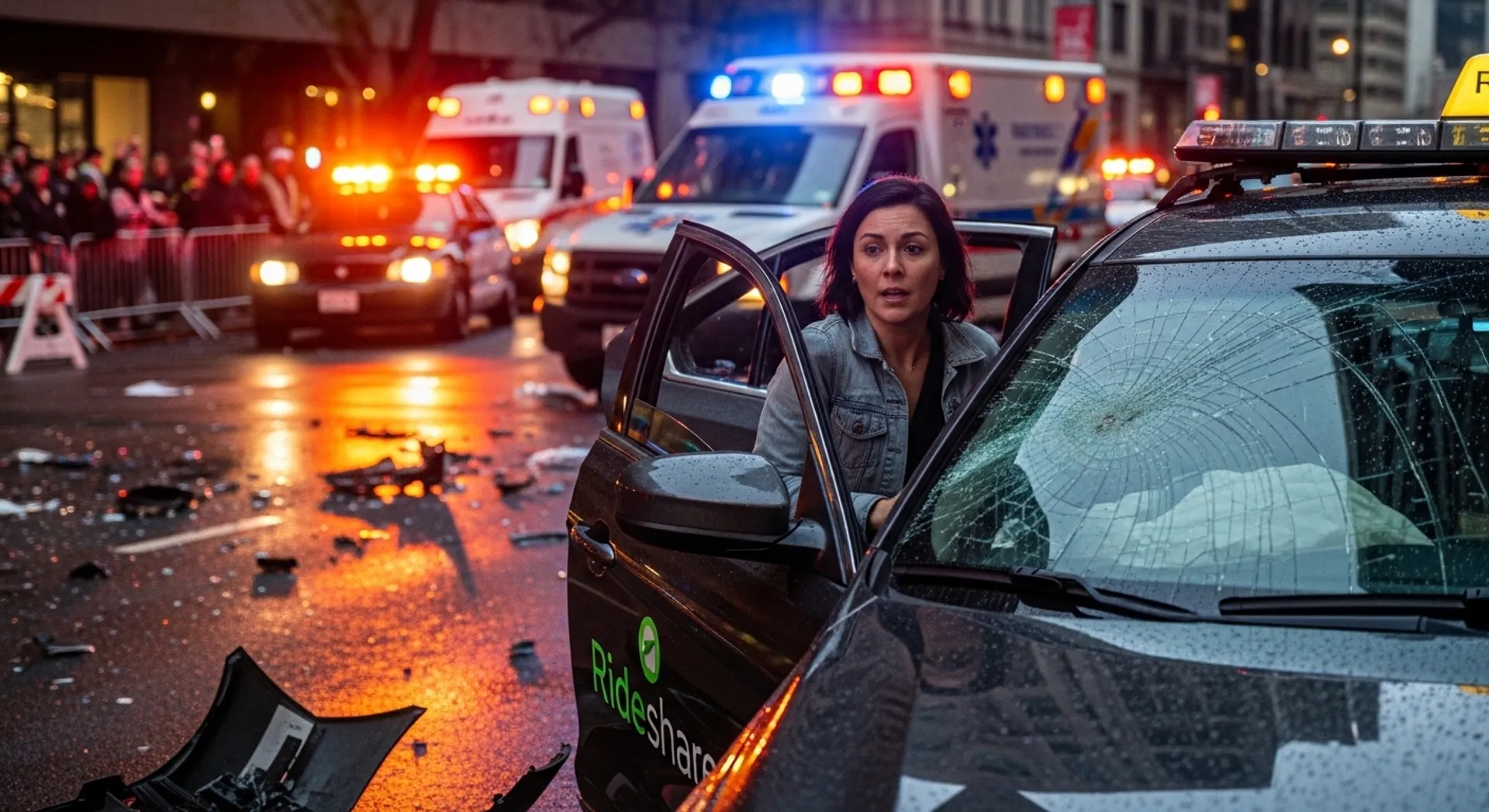
California rideshare accident claims 2026 have become more complicated for one simple reason: not every Uber or Lyft crash involves a fully insured at-fault driver. A passenger may do everything right, book a ride, get in the back seat, and still end up seriously injured because another motorist runs a light, rear-ends the rideshare vehicle, or causes a multi-car collision without enough coverage to pay for the damage. In those cases, the insurance question matters just as much as fault.
That is why Senate Bill 371 matters. Many people hear “rideshare insurance” and assume Uber or Lyft automatically provides massive protection in every situation. That assumption can be dangerous. California still requires strong rideshare liability coverage during active ride periods, but SB 371 changed the required uninsured motorist and underinsured motorist protection available during the passenger portion of the ride. For injured passengers, that can affect how much money is realistically available when the driver who caused the crash has little or no insurance.
If you are trying to understand California rideshare accident claims 2026, the key is not to panic and not to oversimplify. The law did not erase every layer of protection. But it did change an important one. Knowing what changed, what did not, and what evidence matters after a crash can make a real difference in the outcome of the claim.
What SB 371 Changed in California Rideshare Accident Claims 2026
The most important point is precision. SB 371 did not wipe out all rideshare insurance. It changed a specific coverage requirement tied to uninsured and underinsured motorist protection during the passenger-in-vehicle stage of the trip. That distinction matters because many crash victims, and plenty of websites, describe the law too broadly.
The $1 million number did not disappear from every part of the ride
California still requires transportation network company insurance to be primary in the amount of $1,000,000 for death, personal injury, and property damage from the moment a rideshare driver accepts a ride request until the transaction is complete or the ride is complete, whichever is later. That means there is still significant primary liability coverage built into the rideshare structure.
But that is not the same as uninsured or underinsured motorist coverage. Those are different protections designed to help when the other driver is the real problem. If the person who caused the collision has no coverage or not enough coverage, UM/UIM is the part of the insurance picture that starts to matter more.
What actually got reduced
SB 371 lowered the required UM/UIM coverage during the passenger portion of the ride to $60,000 per person and $300,000 per incident. Before that, the required amount was $1,000,000. That is the real legal shift behind so many 2026 rideshare-insurance discussions.
In plain English, this means a badly injured rideshare passenger may face a tighter recovery ceiling when the at-fault driver is uninsured or underinsured. If multiple people are hurt in the same crash, that per-incident limit can become even more important because several claims may compete against the same pool of money.
Why this matters in real injury cases
Serious crashes do not respect minimum limits. Ambulance charges, emergency room care, imaging, surgery, follow-up treatment, physical therapy, lost income, and pain and suffering can push a case far beyond modest insurance amounts. If the at-fault driver has weak coverage and the rideshare UM/UIM layer is lower than people expected, the claim can get tighter fast.
That does not mean every victim is stuck. It means the claim needs to be evaluated carefully. There may be multiple policies, multiple liable parties, or additional sources of recovery depending on the facts. But the days of assuming there is always a $1 million UM/UIM safety net during every passenger ride are over.
What Did Not Change
One of the easiest ways to misunderstand California rideshare accident claims 2026 is to assume the whole rideshare insurance structure collapsed. It did not. Some protections remain in place, and that matters for both passengers and other people hurt in rideshare-related crashes.
Primary rideshare liability coverage still exists
As noted above, the rideshare company must still provide primary liability coverage during the active ride window. That means if the Uber or Lyft driver is at fault while the ride is underway, there may still be a substantial policy available. That part of the insurance framework is different from a case where an outside driver with poor coverage causes the crash.
This distinction is important because many rideshare cases turn on who actually caused the collision. Was it the rideshare driver? Another driver? A commercial vehicle? A chain-reaction crash? Liability facts determine which insurance layer gets examined first.
The app-on, no-passenger period has its own structure
California law also still sets separate coverage rules for the time when a driver is logged into the app but has not yet accepted a ride, and for the time after a ride ends before another one is accepted. In that period, the law requires at least $50,000 per person, $100,000 per incident, and $30,000 for property damage, plus excess coverage of at least $200,000 per occurrence.
That means the legal analysis changes depending on exactly when the crash happened. A passenger already inside the vehicle raises a different coverage discussion than a driver who is merely online waiting for the next fare.
Timing can decide the insurance argument
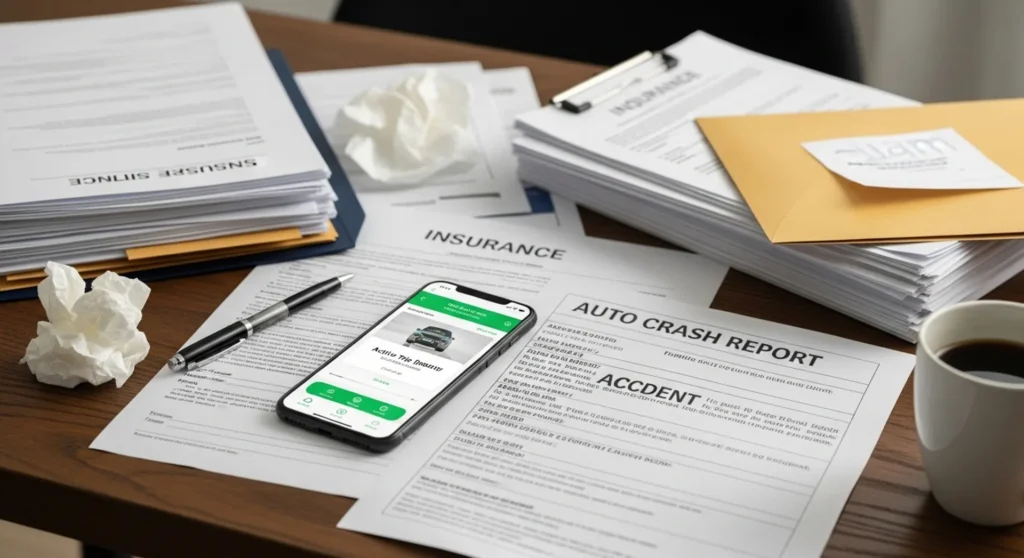
In rideshare cases, app status is not a side detail. It can control the coverage fight. Screenshots, trip receipts, app logs, police reports, and company records may all matter because they help establish whether the driver had accepted a ride, was carrying a passenger, or was simply logged in and available.
This is also where an internal resource like How Attorneys Facilitate Communication With Insurance Companies fits naturally. Rideshare claims can involve overlapping insurers, competing narratives, and a lot of finger-pointing. Early communication strategy matters.
How a Passenger Can Protect a Rideshare Claim After a Crash

If you are injured in an Uber or Lyft collision, treat it like a serious injury case from the start. The first mistake many people make is assuming the app company will sort everything out cleanly. That is not how claims work in the real world. Companies and insurers still investigate, dispute, delay, and negotiate.
Get evidence that proves the ride status
Save the trip receipt, driver name, vehicle details, ride timeline, screenshots from the app, and any notices showing when the ride began and ended. These details can be easy to overlook, but in a coverage dispute they become very important.
You should also get the usual crash evidence: photos of vehicle damage, roadway conditions, visible injuries, witness names, and the police report number. If there is dashcam footage or nearby business surveillance, preserve it fast.
Find out whether the other driver had enough coverage
A lot of the real trouble in California rideshare accident claims 2026 starts when the outside driver turns out to be uninsured or underinsured. That is where the legal and insurance analysis becomes more technical. Policy limits, notice requirements, and multiple insurers can all come into play.
This is exactly why your readers should also be sent to How to Navigate Uninsured Motorist Claims in California. The coverage principles overlap heavily, even though a rideshare crash adds another layer.
Do not assume the first coverage explanation is complete
After a rideshare crash, one insurer may point to another. The app company may focus on the outside driver. The outside driver’s insurer may dispute fault or minimize injuries. A personal insurer may argue that another policy is primary. This kind of blame-shifting is common in complex auto claims.
That is why passengers should be cautious with recorded statements and quick settlement pressure. A case involving multiple insurance layers can look simple on day one and very different once the policy details are actually reviewed.
Where These Cases Can Get Even More Complicated
Not every rideshare case is a standard Uber-or-Lyft passenger crash. Some involve hit-and-runs. Some involve autonomous or semi-autonomous technology. Some involve defective vehicle parts or government-owned vehicles. Once the facts get more layered, the legal analysis can widen beyond ordinary negligence.
Hit-and-run and autonomous-vehicle overlaps are real
If the outside driver flees, a rideshare passenger may face many of the same evidence problems seen in ordinary hit-and-run cases, but with an added rideshare insurance layer. If the crash involves a Waymo, Cruise, or another automated platform rather than a conventional Uber or Lyft trip, the liability and insurance questions can change again.
That makes it reasonable to cross-link this article to How Self-Driving Cars Are Changing the Landscape of Auto Accident Liability. Not every app-based ride is governed by the same practical rules anymore.
Severe injuries expose coverage problems faster
A minor-injury case may settle within available limits without exposing every weakness in the policy stack. A severe case is different. When treatment is expensive and future losses are substantial, low UM/UIM numbers become a much bigger issue. That is when policy interpretation, excess exposure, and additional liable parties matter most.
Why early case framing matters
The first version of the claim story often has too much influence later. If the case is framed loosely as “just a rideshare crash,” the important insurance details may be missed. If it is framed correctly from the start as a layered claim involving app status, outside-driver coverage, and potential UM/UIM limits, the injured person is in a better position.
That is the real takeaway from SB 371 for everyday crash victims. The law did not make rideshare cases hopeless. It made them more technical. Strong claims will depend even more on getting the facts, timing, and coverage analysis right early.
Final Thoughts
California rideshare accident claims 2026 are not impossible after SB 371, but they are less forgiving when the other driver has no insurance or not enough insurance. The big mistake is assuming every Uber or Lyft ride still carries the same uninsured and underinsured protection people may have heard about in earlier years.
The smarter move is to separate the issues. First, identify who caused the crash. Second, confirm the rideshare phase at the time of impact. Third, map every available policy instead of guessing. And fourth, preserve the records that prove both the ride status and the injury damage.
For official background, see California SB 371 and the CPUC transportation network company insurance overview.