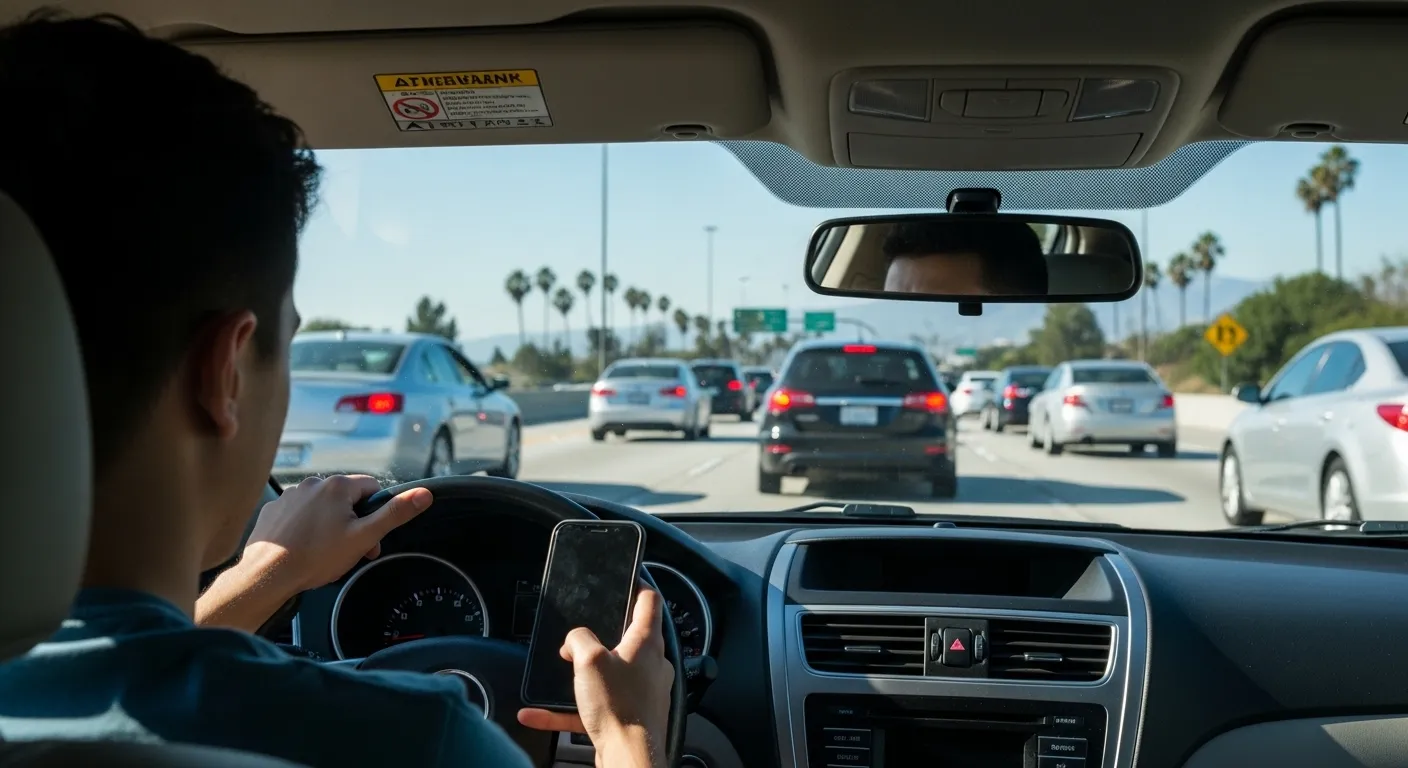
California distracted driving accident claims still rank among the most important car accident topics in 2026. The danger has not gone away. It has changed shape. Years ago, most people linked distracted driving to texting. That still matters, but it is no longer the full story. Today, many crashes involve drivers who check maps, scroll social media, watch short videos, record content, or tap through large screens while moving through traffic.
That shift matters in injury cases. A distracted driving crash may look simple at first. Later, the case often turns into a fight over timing, phone use, app activity, witness statements, and fault. Insurance companies know this. They often try to frame the conduct as normal or harmless. Victims need stronger proof to show what really happened.
California creates the perfect setting for these claims. Drivers spend long hours in traffic. Many depend on navigation apps every day. Busy city streets, packed freeways, and constant stop-and-go traffic leave little room for mistakes. One glance away from the road can cause a rear-end crash, unsafe lane change, intersection collision, or even a multi-vehicle pileup.
If your readers already saw our post on Distracted Driving Still Tops the List in California Car Crashes — 2025 Insights, this article works as a strong update. The legal basics still matter. The evidence now looks different. A case may involve app logs, dashcam footage, infotainment use, and a driver who says they only checked directions for a second. In real life, that second can decide the whole claim.
Why California Distracted Driving Accident Claims Look Different in 2026
These claims now involve more than a simple text message. Many drivers deny texting and then argue that they were only checking maps, changing music, or using a mounted device. That excuse does not solve the problem. A driver can still act carelessly even without typing out a message. The legal issue stays the same. Did the driver take attention away from the road and cause harm?
The danger goes far beyond texting
Modern distraction is broader and more visual than many people realize. A driver may watch a short clip in traffic. Another may tap through a playlist while merging. Someone else may hold a phone to follow turn-by-turn directions. None of those actions look harmless once a crash happens. The label matters less than the behavior. When a driver takes eyes off the road, hands off the wheel, or focus away from traffic, negligence becomes a real issue.
That is why California distracted driving accident claims in 2026 often involve conduct that looked casual in the moment. The driver may say it was only a quick glance. The victim still ends up injured. A jury, adjuster, or attorney will care about the result, the risk, and the proof.
Video, maps, and app use create tougher evidence fights
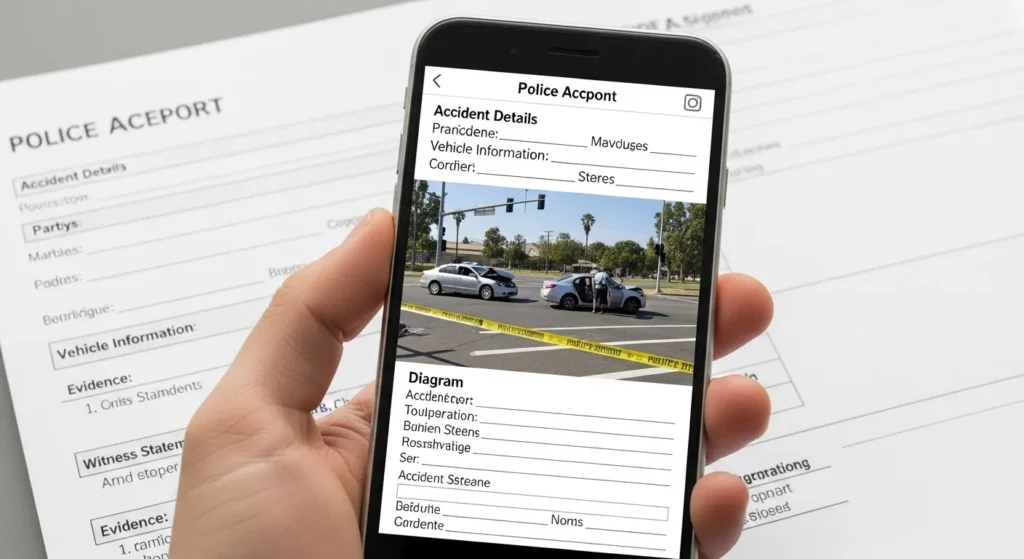
These cases now require better evidence. Witnesses still matter, but they do not tell the whole story. Lawyers may need phone records, app timestamps, vehicle data, dashcam footage, or surveillance video from nearby businesses. Passengers may also help if they saw the driver looking down or holding a device just before impact.
Many drivers admit they were not texting. Then they leave out the fact that they were watching a video, searching for an address, or responding to a rideshare or delivery app. That gap matters. It gives the defense room to blur the facts. Quick action helps close that gap. Video gets erased. Businesses overwrite footage. Memories fade. Strong claims often depend on how fast the victim preserves proof.
California’s hands-free rules still matter in injury claims
California’s hands-free rules do more than guide safe driving. They also help frame negligence after a crash. When the at-fault driver holds a phone, taps through an app, or interacts with a device at the wrong time, that conduct can support liability. It can also increase settlement pressure because the unsafe behavior becomes easier to explain.
Readers who want a public safety reference can review the California Office of Traffic Safety distracted driving guidance. In a personal injury case, the practical point is simple. Unsafe device use often helps explain why the crash happened.
Fault is rarely as simple as it first appears
Even when distraction seems obvious, the case may still get messy. Insurance companies rarely roll over. They may claim traffic stopped without warning. They may argue the injured driver sped, changed lanes too quickly, or failed to react. Sometimes they even try to shift attention away from the distracted driver and toward road conditions or a third vehicle.
For that reason, a lawyer must connect the distraction to the crash itself. The timeline matters. The phone use matters. The impact pattern matters. Medical records matter too. A good claim shows how the conduct led to the collision and how the collision caused the injuries. Loose proof invites denial. Clear proof builds leverage.
Comparative fault can still reduce recovery
Insurers often use comparative fault to cut claim value. They may argue that the injured person braked hard, drove too fast, or failed to avoid the crash. Those arguments do not always work, but they can still reduce compensation if no one challenges them with solid evidence.
That is why this topic pairs well with Understanding Comparative Negligence: How It Affects Your Car Accident Case. California follows comparative negligence rules. In plain terms, partial fault can lower the final recovery. Victims need a clear case theory early, not after the insurer has already shaped the story.
What to Do After a Distracted Driving Crash in California
Victims should treat these cases as disputed from day one. Do not assume the other driver will admit what happened. Do not assume the police report will include every key fact. Do not assume the insurer will connect the distraction to the injuries without a fight. California distracted driving accident claims often grow stronger or weaker in the first few days after the wreck.
Build the case before key evidence disappears
Start with the basics right away. Get medical treatment. Take photos of the vehicles, the roadway, and any visible injuries. Collect witness names and contact details. Write down what you remember while the events stay fresh. Small details can matter later, especially in a disputed liability case.
Witnesses can make a huge difference. One person may have seen the other driver looking down. Another may have noticed a phone in the driver’s hand or a delayed reaction before impact. Nearby cameras may also help. Homes, stores, parking lots, and traffic systems sometimes capture the crash or the moments leading up to it.
Hit-and-run cases demand even faster action. When the at-fault driver leaves, every piece of evidence becomes more valuable. Readers dealing with that situation should also review What to Do After a Hit-and-Run Accident: Legal Steps You Must Take. The core lesson stays the same. Move fast, preserve proof, and do not wait for the insurer to do the work for you.
The first week can shape the entire claim
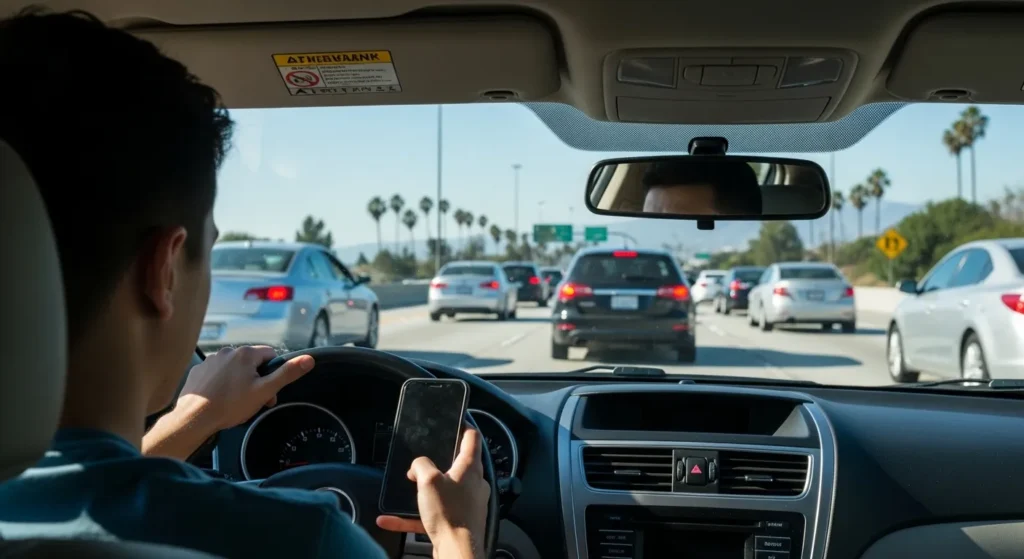
The first week often sets the tone for the whole case. Insurance adjusters may call quickly. They may request a recorded statement. Some may offer an early settlement before the medical picture becomes clear. That approach helps the insurer, not the injured person.
Readers should also see Should You Accept the Insurance Company’s First Offer After an Accident?. Early offers often come before doctors know the full extent of treatment, pain, lost income, or future care. A distracted driving crash may look straightforward, but claim value can rise once the evidence and injuries come into focus.
Some distracted driving cases also overlap with other legal issues. The at-fault driver may carry too little insurance. A rideshare app may be involved. A vehicle’s screen-based controls may raise additional questions. Those facts can change how the claim moves forward. That is another reason this topic fits your site so well. It connects naturally with your posts about uninsured motorist claims, government deadlines, product defects, and new vehicle technology.
This topic also works well for search. Many people do not search only for “distracted driving.” Search for a real crash. Want to know whether phone use helps prove fault. They want to know whether an insurance company can deny the claim. They want to know what evidence matters and what steps to take next. This post answers those questions in a way that matches real user intent.
The bottom line is clear. California distracted driving accident claims in 2026 are not just about texting. They often involve videos, maps, apps, screen tapping, and other forms of divided attention. Victims need proof, strategy, and quick action. When a driver stops paying attention and causes serious harm, the legal claim should show exactly how that distraction led to the crash and why full compensation matters.