
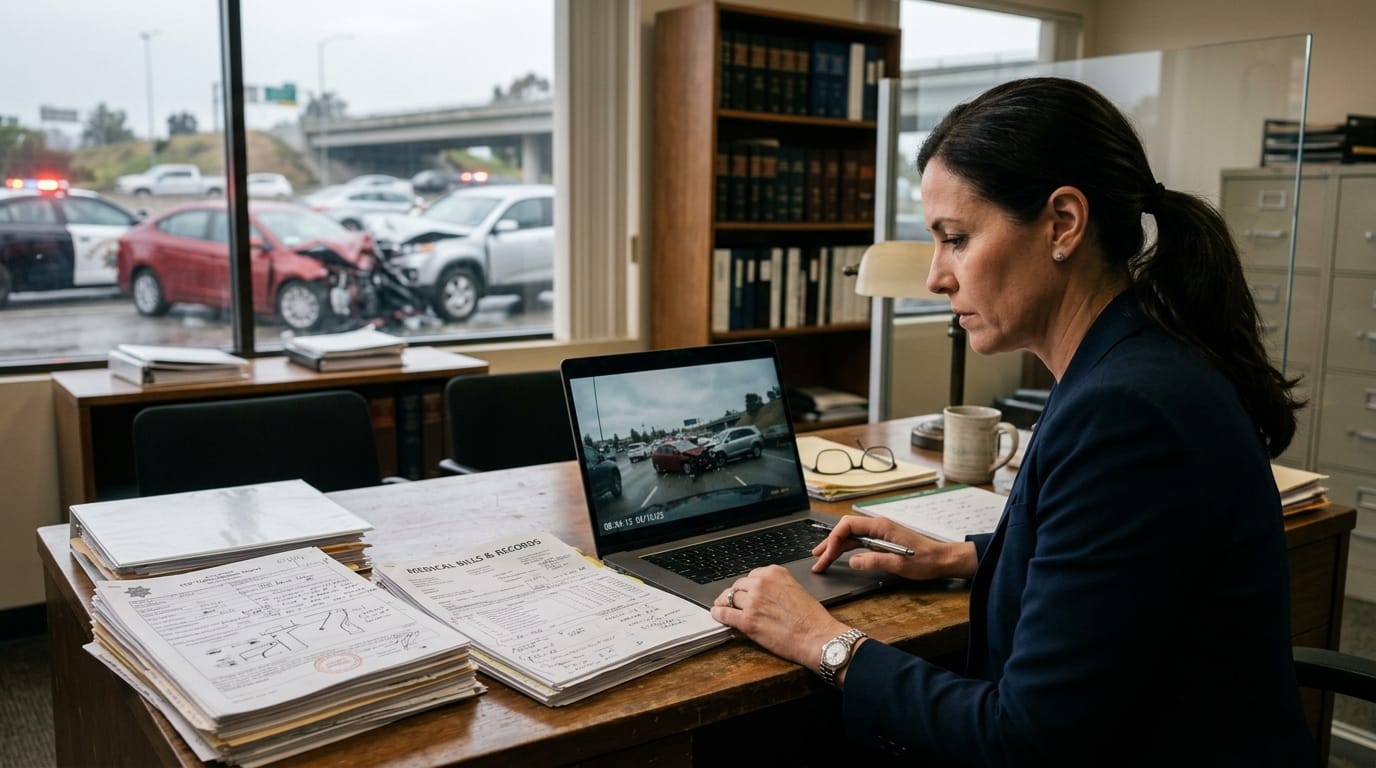
California dashcam accident claims are becoming more important in 2026 because crash evidence is no longer limited to a police report, witness statement, and a few photos from the scene. Many drivers now have dashcams. Newer vehicles may store event data. Insurance apps may record driving behavior. Phones, maps, onboard systems, and nearby cameras may also create a digital trail that explains what happened before impact.
This matters because auto accident claims often become a fight over timing. One driver says the other car changed lanes suddenly. Another driver says the light was already red. A pedestrian says the vehicle never slowed down. An insurance adjuster may argue the crash was unavoidable. When strong video or vehicle data exists, it can help replace guesses with facts.
At the same time, digital evidence can create new problems. Footage may be overwritten. A vehicle may be repaired or sold before the data is downloaded. A dashcam clip may show only one angle. An insurance company may focus on the part of the video that helps its own position. That is why injured people should understand how California dashcam accident claims work before they accept an early settlement or give a detailed recorded statement.
This topic connects naturally with your existing guides on California distracted driving accident claims, California speed safety camera accident claims, California hit-and-run accident claims, and attorney communication with insurance companies.
Why Digital Crash Evidence Matters More in 2026
Digital evidence matters because modern crashes often happen too quickly for people to remember every detail accurately. A driver may remember the impact but forget the traffic signal. A passenger may remember the other vehicle swerving but not the lane position. A witness may see the crash from a distance and miss the moments that caused it. Dashcams, vehicle data, and telematics can help fill those gaps.
In California dashcam accident claims, the strongest evidence usually does not come from one source. It comes from combining several sources. Dashcam footage may show the lane movement. Vehicle data may show braking or speed changes. Photos may show the final resting position of the vehicles. Medical records may show how the impact caused the injury. Together, these facts can create a cleaner story than memory alone.
Dashcams Can Strengthen the Timeline
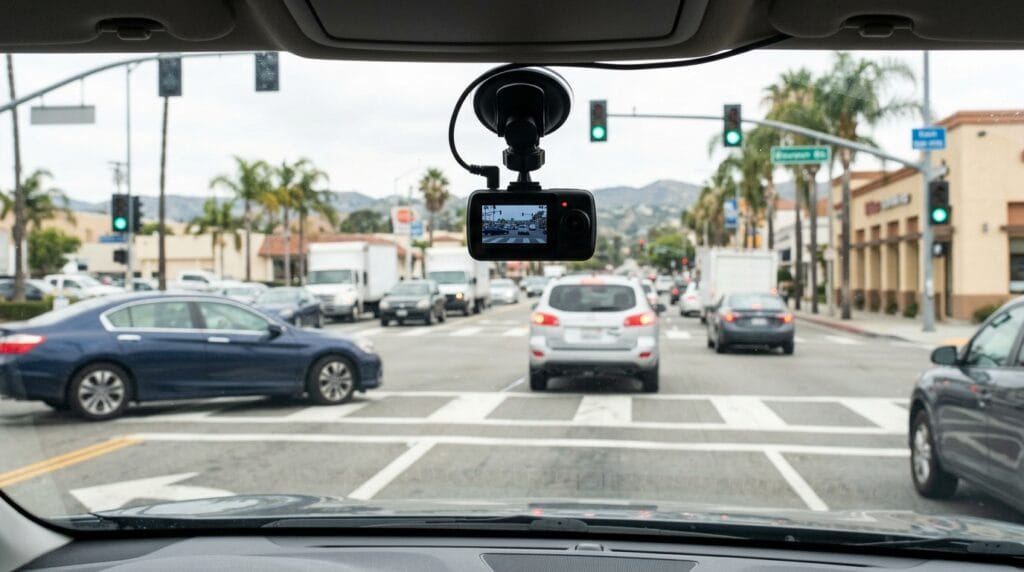
Dashcams can be powerful because they often capture the seconds before the crash. That short window can show whether a driver ran a red light, changed lanes without signaling, followed too closely, braked too late, drifted over the line, or failed to yield. In a rear-end crash, a dashcam may show traffic slowing before impact. In an intersection crash, it may show signal timing, vehicle speed, or pedestrian movement.
Dashcam footage may also help in hit-and-run cases. Even if the plate is not perfectly clear, the video may show vehicle color, body shape, direction of travel, damage location, or unique features. That can support a broader investigation using nearby business cameras, traffic cameras, or witness reports. This connects closely with your guide on California ghost plate accident claims, because an obscured plate can make video evidence harder to use.
Video Should Be Saved Before It Is Overwritten
The biggest mistake victims make is waiting too long. Many dashcams record on a loop. If the file is not saved, the device may overwrite the crash footage during later driving. Nearby businesses may also delete security footage within days. Doorbell cameras, apartment cameras, delivery vehicles, buses, and rideshare vehicles may hold useful clips, but those clips may disappear quickly.
After a crash, injured people should save their own footage, take screenshots, back up the file, and avoid editing the original. If another driver, witness, or business has footage, ask for it as soon as possible. If the injury is serious, a lawyer may send a preservation letter before key evidence disappears.
Telematics Can Support or Challenge Driver Statements
Telematics can include driving behavior data from insurance apps, fleet systems, navigation apps, or connected vehicle services. This data may show speed, hard braking, rapid acceleration, sharp cornering, phone handling, route history, or time stamps. In some claims, telematics can support what the injured person already knows. In others, it can expose a driver who claims they were careful when the data suggests otherwise.
Telematics can also work against a victim if it is misunderstood. For example, a hard-braking event does not always mean careless driving. It may show that the driver reacted properly to another vehicle’s dangerous move. A speed reading must also be reviewed with location, traffic, road conditions, and timing. The data needs context.
Vehicle Data Can Confirm Speed, Braking, and Impact
Many modern vehicles contain systems that may record crash-related information. Event data recorder information may include pre-crash vehicle dynamics, driver inputs, crash severity, restraint use, airbag deployment, and other technical details. Readers can review the National Highway Traffic Safety Administration’s explanation of event data recorders here: NHTSA Event Data Recorder information.
This kind of data can matter when the parties disagree about speed, braking, seat belt use, or impact force. If one driver says they were stopped, data may help confirm whether that is true. If an insurance company argues the impact was too minor to cause injury, crash data and vehicle damage may help show the actual force involved. Airbags deployed, the data may help explain the severity of the event.
EDR Data Is Not the Same as Dashcam Footage
Dashcam footage shows images. Event data recorder information shows technical crash data. They are not the same thing, and one does not automatically replace the other. A dashcam may show who entered the intersection first, while vehicle data may show whether the driver braked before impact. Both can matter.
However, downloading vehicle data is not a casual task. It may require the right tools, the right expert, and the right legal request. If the car is repaired, sold, or destroyed, the opportunity may be lost. That is why serious California dashcam accident claims should also consider whether the damaged vehicle itself must be preserved.
How Victims Should Protect a California Dashcam Accident Claim
Protecting a claim starts with medical care. Evidence is important, but health comes first. A crash victim should get checked for head pain, neck pain, back pain, dizziness, numbness, chest pain, shoulder injuries, knee injuries, or any symptom that appears after the crash. Medical records help connect the injury to the accident and prevent the insurance company from arguing that treatment started too late.
After medical needs are addressed, evidence preservation becomes the priority. Take photos of vehicle damage, road signs, lane markings, skid marks, debris, traffic signals, cameras, license plates, and the final position of the vehicles. Save dashcam footage in more than one place. Write down witness names and phone numbers. Keep the police report number. Save every insurance letter, claim number, repair estimate, medical bill, and missed-work record.
Common Insurance Fights Over Digital Evidence
Insurance companies may not ignore digital evidence, but they may try to interpret it in the narrowest possible way. They may say the footage does not show the full crash. One may argue the angle is unclear. They may focus on a few seconds that make the victim look less careful. They may use telematics to suggest the victim was speeding, distracted, or slow to react.
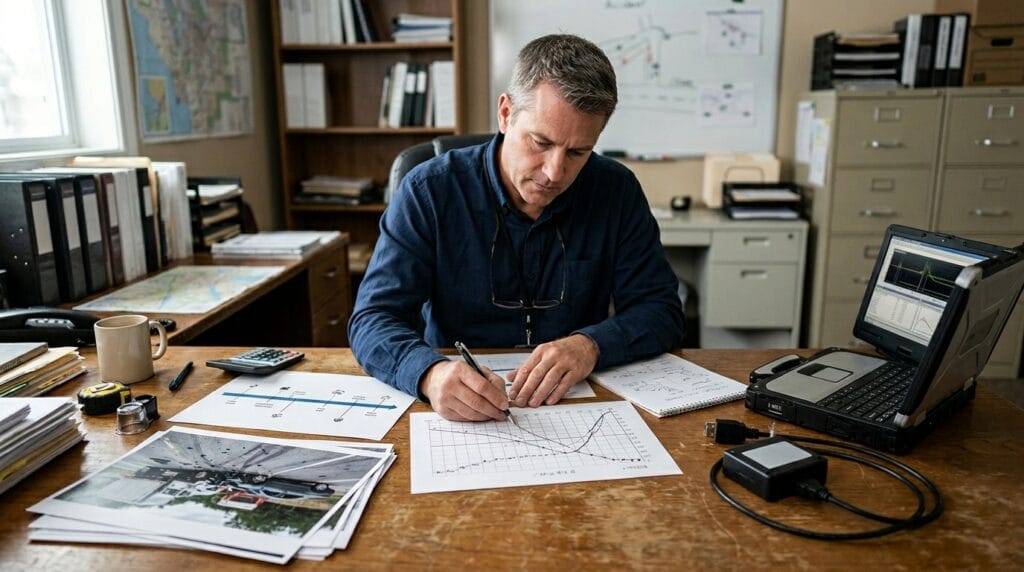
That does not mean the evidence is bad. It means the evidence needs to be reviewed carefully. A short clip may require scene photos, a police report, medical records, and witness statements to explain what really happened. Vehicle data may require an expert. A timeline may need to compare video time stamps with phone records, map data, emergency response records, or business camera footage.
Do Not Let the Insurance Company Control the Story
The most important takeaway is simple: do not give the insurance company full control over the evidence narrative. If footage helps your case, preserve it before it disappears. If vehicle data may matter, do not rush repairs or salvage. The insurer asks for a recorded statement, avoid guessing about speed, distance, timing, or fault. A guess can create problems later, even when the real evidence supports the claim.
California dashcam accident claims in 2026 can be stronger when victims act quickly. Video, vehicle data, telematics, photos, medical records, and witness statements can work together to prove fault and damages. But the evidence must be saved, reviewed, and explained correctly. A crash is stressful, but the first few days may decide whether the strongest proof is protected or lost forever.