California minimum auto insurance accident claims are more important in 2026 because the state’s liability coverage limits are no longer the old 15/30/5 minimums many drivers remember. California now requires higher minimum liability coverage for standard auto insurance policies. That change can affect how much money may be available after a crash, how insurance companies evaluate claims, and why some injured victims still need to look beyond the at-fault driver’s basic policy.
Under California’s current minimum requirements, drivers must carry at least $30,000 for injury or death to one person, $60,000 for injury or death to more than one person, and $15,000 for property damage. These limits are often called 30/60/15 coverage. At first glance, that sounds like a major improvement. In many ways, it is. But after a serious crash, these amounts may still be too low to cover emergency treatment, surgery, physical therapy, lost wages, vehicle repairs, and long-term pain.
This is why California minimum auto insurance accident claims require careful handling. A victim should not assume that the insurance company will automatically pay the full policy. A victim should also not assume the available coverage is enough. Medical bills can rise quickly, especially when the accident involves a head injury, spinal injury, broken bone, surgery, or multiple injured people.
This guide explains what California’s 30/60/15 coverage means, why minimum insurance can still leave accident victims underpaid, and what steps injured people should take after a crash.
How California’s 30/60/15 Minimum Insurance Works
California requires drivers to prove financial responsibility. For most drivers, that means carrying auto liability insurance. Liability insurance does not pay the policyholder for their own injuries. Instead, it helps pay for injuries or property damage the policyholder causes to someone else.
In a car accident claim, this distinction matters. If another driver caused your crash, their liability insurance may become the first source of compensation. That coverage may help pay for medical care, vehicle damage, lost income, and other losses. But the amount available depends on the policy limits and the facts of the crash.
For example, if one person is injured, the minimum bodily injury limit may be $30,000. If multiple people are injured in the same crash, the minimum total bodily injury limit may be $60,000. If the crash damages a vehicle, fence, wall, or other property, the minimum property damage limit may be $15,000.
Why Higher Minimums Do Not Guarantee Full Compensation
The new minimums offer better protection than the old limits, but they do not guarantee full compensation. A single ambulance ride, emergency room visit, imaging test, orthopedic consultation, and follow-up treatment can consume a large part of a $30,000 bodily injury limit. If the victim needs surgery, the minimum policy may fall short very quickly.
The problem becomes worse when several people are injured. A $60,000 per-accident limit must be shared among all injury victims. If three or four people are hurt, each person may receive only a portion of the available coverage. This can create difficult disputes when one victim has severe injuries and others also have valid claims.
The Property Damage Limit Can Also Be Too Low

The $15,000 property damage minimum is better than the older $5,000 requirement, but it can still be too low. Many vehicles cost far more than $15,000 to replace. Even moderate repairs can become expensive when airbags deploy, sensors are damaged, frames are affected, or parts are delayed.
Modern vehicles often include cameras, radar sensors, lane assistance systems, and other technology built into bumpers and windshields. Repairing those systems may require calibration and specialized work. That can push a repair estimate higher than expected. If the at-fault driver only has minimum coverage, the property damage limit may not pay for everything.
Policy Limits Are Not the Same as Claim Value
A claim may be worth more than the available insurance. For example, a victim may have $80,000 in medical bills, lost wages, and pain-related damages, but the at-fault driver may only carry $30,000 in bodily injury coverage. In that situation, the policy limit does not define the true value of the harm. It only defines how much that insurance policy may pay.
This is one reason accident victims should avoid accepting a fast settlement before they understand their injuries. Once a release is signed, the claim may be closed permanently. If symptoms worsen later, the victim may not be able to ask for more money from that same insurer.
What Victims Should Do When Minimum Coverage Is Not Enough
When minimum insurance is not enough, the injured person must look at every possible source of recovery. This may include the at-fault driver’s insurance, the victim’s own uninsured or underinsured motorist coverage, medical payments coverage, health insurance, employer benefits, or claims against other responsible parties.
Some crashes involve more than one negligent party. A distracted driver may cause the impact, but a defective vehicle part, unsafe road condition, commercial driver, or negligent employer may also contribute. In those cases, the claim should not stop with the first insurance policy found.
Victims should also review how the crash happened. Evidence can affect both fault and settlement value. Useful evidence may include photos, dashcam footage, police reports, witness statements, medical records, vehicle damage, repair estimates, and traffic camera evidence. Your related guides on California distracted driving accident claims and California speed safety camera accident claims explain how digital evidence may help prove liability.
Uninsured and Underinsured Motorist Coverage May Matter
Uninsured motorist coverage may apply when the at-fault driver has no insurance. Underinsured motorist coverage may apply when the at-fault driver has insurance, but not enough to cover the victim’s losses. These coverages are often handled through the injured person’s own auto insurance policy.
This can be confusing because many people feel uncomfortable making a claim with their own insurer when they did nothing wrong. But uninsured and underinsured motorist coverage exists for this exact situation. It can provide another layer of protection when the responsible driver has no insurance or only minimum limits.
Hit-and-run crashes can create similar problems. If the driver flees and cannot be identified, the victim may need to rely on their own available coverage. Your guide on California hit-and-run accident claims is a natural internal resource for victims facing that situation.
Insurance Companies May Still Dispute Fault and Damages
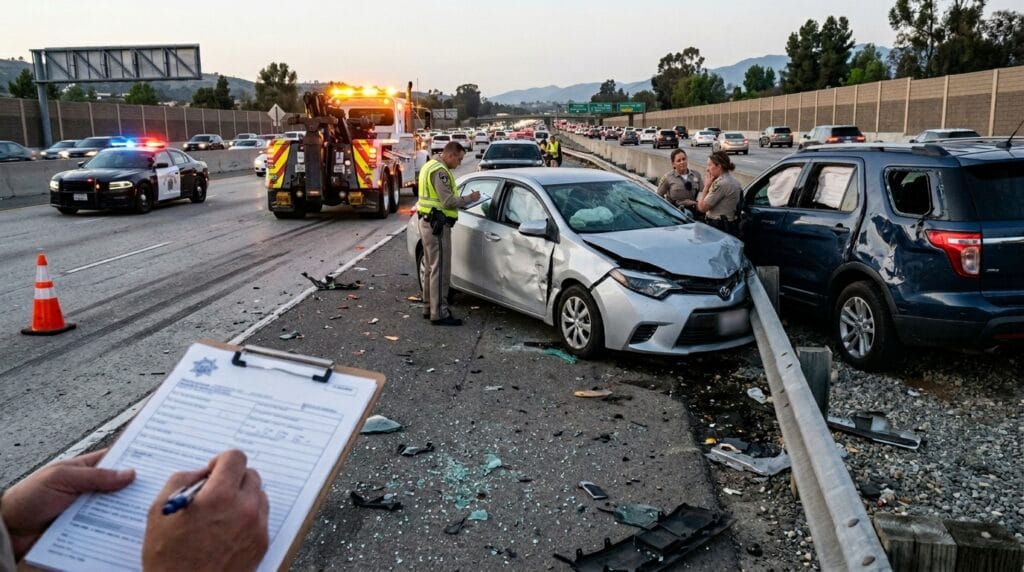
Even when coverage exists, insurance companies may still dispute the claim. They may argue the victim was partly at fault, the injuries were pre-existing, treatment was too expensive, treatment lasted too long, or the crash impact was too minor to cause serious harm.
This is why California minimum auto insurance accident claims should be supported with organized documentation. Medical records should connect the injuries to the crash. Photos should show vehicle damage and road conditions. Witness statements should be collected early. Repair estimates should be saved. If a victim misses work, wage records should be kept.
Communication with insurance companies must also be handled carefully. Adjusters may sound friendly, but their job is to protect the insurance company’s money. Before giving a recorded statement or accepting a settlement, victims should understand what information they are providing and how it may be used. Your post on how attorneys facilitate communication with insurance companies supports this point well.
Medical Treatment Should Not Be Delayed
One of the biggest claim mistakes is waiting too long to get medical care. Some injuries appear immediately, while others develop over hours or days. Neck pain, back pain, headaches, dizziness, numbness, shoulder pain, knee pain, and emotional distress should be taken seriously.
Delaying treatment gives the insurance company an opening to argue that the injury was not caused by the accident. Prompt treatment protects both health and claim value. Victims should follow medical instructions, attend appointments, and keep records of bills, prescriptions, imaging, therapy, and work restrictions.
Do Not Settle Before You Know the Full Damage
A quick settlement may seem helpful when bills are arriving, but it can become a serious mistake. Minimum coverage claims often move fast because the insurance company may want to close the file before the full injury picture becomes clear. If the victim accepts too early, they may be stuck with unpaid bills later.
Before settling, victims should know the total medical expenses, future treatment needs, lost income, repair costs, and long-term effects. They should also know whether other insurance coverage may apply. A fair claim review should include both current losses and future losses.
California minimum auto insurance accident claims in 2026 require more strategy than many victims expect. The 30/60/15 limits are better than the old minimums, but serious crashes can still exceed them. When injuries are significant, victims should preserve evidence, document treatment, review all available insurance, avoid rushed statements, and consider whether more than one party may be responsible.
The bottom line is simple: minimum insurance is only the starting point. After a California crash, the real goal is not just finding a policy. The real goal is proving fault, documenting damages, and identifying every possible source of compensation before the claim is closed.
For official details about California’s current liability insurance requirements, readers can review the California DMV auto insurance requirements.