
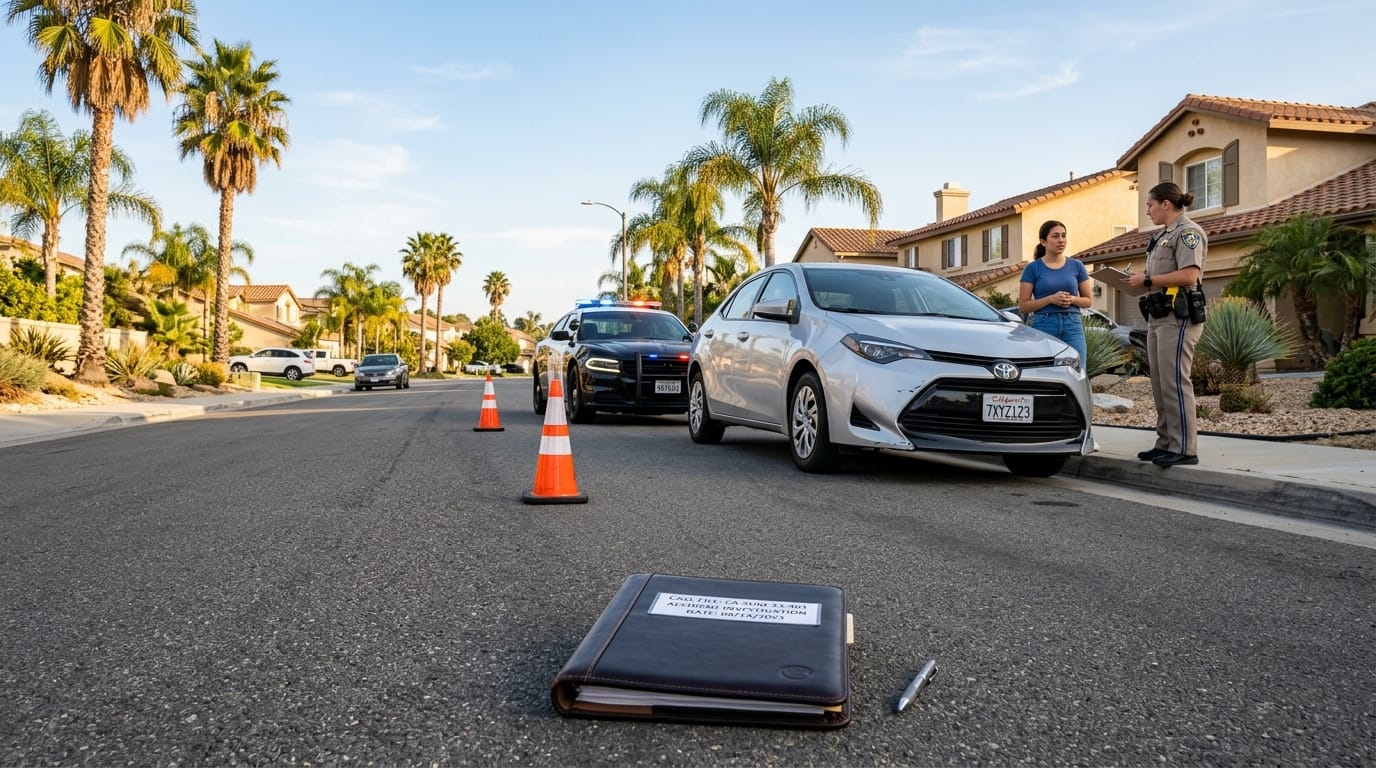
A California teen driver accident claim can become complicated quickly. Teen crashes often involve inexperience, distraction, speeding, passengers, nighttime driving, or poor judgment behind the wheel. When a crash causes injuries, the case may involve the teen driver, the vehicle owner, parents, insurance companies, passengers, and other drivers.
This topic matters in 2026 because summer driving risk is already here. The period between Memorial Day and Labor Day is often called the 100 Deadliest Days for teen drivers. Teens may drive more during school breaks, summer jobs, beach trips, family visits, and late-night activities. More driving means more chances for mistakes.
A teen driver does not need to act recklessly to cause a serious crash. Inexperience alone can create danger. A young driver may misjudge speed, follow too closely, overcorrect, panic during a lane change, or fail to notice traffic stopping ahead. If passengers, phones, music, or fatigue enter the picture, the risk grows.
For injured victims, the legal question is clear. Did the teen driver fail to use reasonable care? If yes, the injured person may have a claim for medical bills, lost income, pain and suffering, future treatment, vehicle damage, and other losses.
Why California Teen Driver Accident Claims Are Timely in 2026
Teen driving remains a major road safety issue. The National Highway Traffic Safety Administration says motor vehicle crashes remain a leading cause of death for people ages 15 to 18 in the United States. NHTSA also reported that 2,320 people were killed in crashes involving teen drivers in 2024. Readers can review the official safety guidance here: NHTSA teen driving safety information.
The summer months add another layer of concern. AAA reported that 13,135 people died in crashes involving teen drivers from 2019 through 2023. More than 30% of those deaths happened during the 100 Deadliest Days between Memorial Day and Labor Day. That makes summer a strong time to discuss teen crash claims, passenger safety, and insurance disputes.
A California teen driver accident claim often depends on details that are easy to miss. Who was in the car? Was the teen using a phone? Was the crash at night? Did the teen have a provisional license? Was the teen speeding, distracted, or violating passenger rules? Did another driver contribute to the crash?
Insurance companies may use these details to reduce payment. They may blame the injured person, another driver, poor weather, road design, or the teen’s lack of experience. A strong claim needs evidence, not assumptions.
California provisional license rules can affect the claim
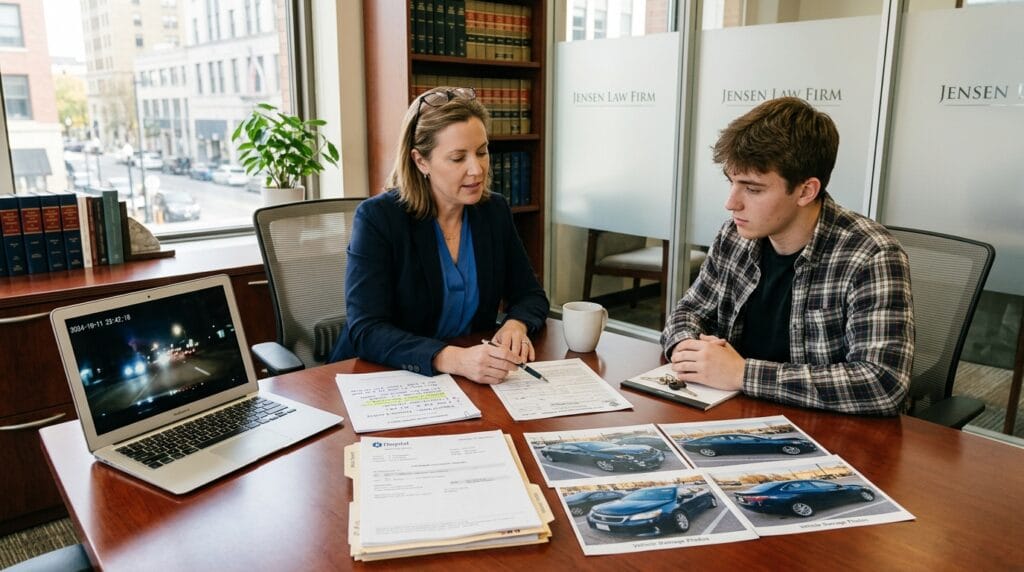
California has special rules for teen drivers with provisional licenses. The California DMV explains that provisional drivers cannot drive between 11 p.m. and 5 a.m. during the first 12 months of licensing. They also cannot drive with passengers under 20 unless a licensed driver age 25 or older is in the vehicle, subject to specific exceptions. Readers can review the DMV guidance here: California DMV provisional driver restrictions.
These rules can matter after a crash. If a teen violated a passenger or nighttime restriction, that fact may help show unsafe conduct. It may also explain why the crash happened. For example, a teen driving late at night with several young passengers may face more distraction, noise, pressure, and fatigue.
A violation does not automatically decide the full case. The crash still needs a fact-specific review. However, provisional license rules may become important evidence when the insurer disputes fault.
Passenger distractions can make teen crashes worse
Passengers can change how a teen drives. Friends may talk loudly, play music, give directions, record videos, or pressure the driver to speed. A young driver may look away from the road for only a second. That second can be enough to miss stopped traffic, a red light, or a pedestrian.
Passenger details should be documented early. Victims should note how many people were in the teen driver’s vehicle. They should also ask whether passengers saw phone use, speeding, drifting, or risky behavior before impact.
If passengers gave statements at the scene, those statements may help. If they later change their story, police reports, text messages, social media posts, and witness accounts may become more important.
Night driving can raise fatigue and visibility issues
Night crashes often involve reduced visibility, fatigue, glare, and slower reaction time. A teen driver may struggle to judge distance or speed in darkness. They may also fail to see pedestrians, cyclists, stopped vehicles, or lane shifts.
If the crash happened at night, the investigation should review lighting, road markings, headlights, weather, traffic signals, and witness visibility. Photos of the scene can help. Dashcam footage, security video, and traffic cameras may also show how the crash developed.
Nighttime crashes may also connect to drowsy driving. A teen coming home from work, sports, a party, or a long day out may be too tired to drive safely. Fatigue does not excuse careless driving.
Distracted driving and speeding are common fault issues
Distracted driving can be central to a teen crash claim. A phone may be the biggest concern, but it is not the only one. Food, music, passengers, navigation apps, pets, and emotional conversations can all distract a new driver.
Your site already has a related article on distracted driving in California car accidents. That internal link fits well because phone evidence, witness details, and driver behavior can help prove fault.
Speeding can also shape the claim. A teen driver may not understand how speed affects stopping distance. They may follow too closely or enter a curve too fast. They may also speed to impress passengers or avoid being late.
Your site’s article on California speed safety camera accident claims can support this section. Speed evidence can help show why a crash became more severe.
Phone evidence may become important
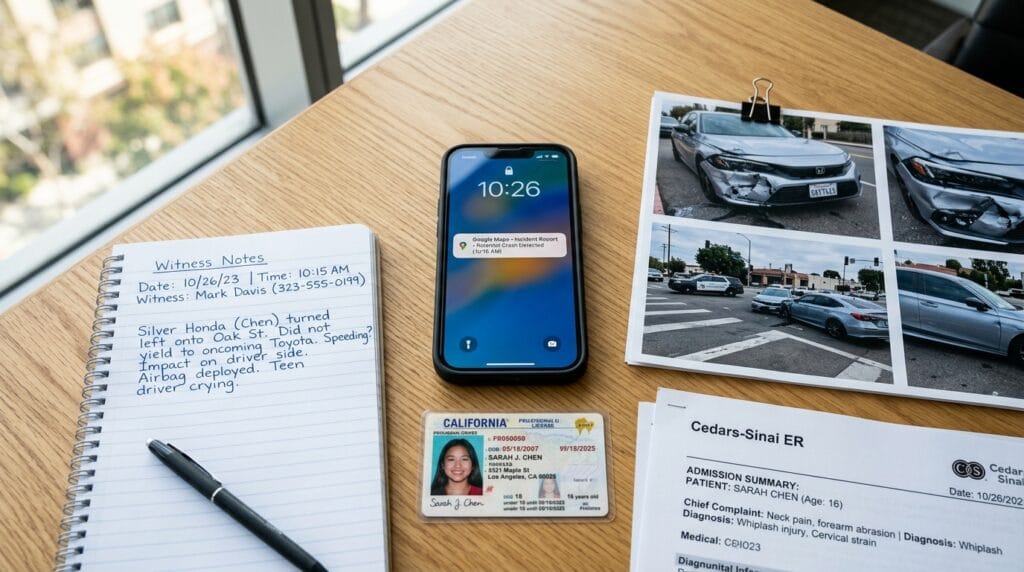
Phone evidence can answer key questions. Was the teen texting? Was a map app active? Was the driver recording video? Did a message arrive seconds before impact? Did passengers post anything after the crash?
Victims usually cannot access another driver’s phone on their own. An attorney may need to preserve and request relevant records. Dashcam footage, police reports, and witness statements can also help build the same timeline.
Do not rely only on what the teen driver says. A scared teen may deny phone use. Passengers may protect a friend. Digital evidence can reveal what words do not.
How to Protect a California Teen Driver Accident Claim
After a teen driver crash, safety comes first. Call 911 if anyone is injured. Get medical care right away. Some injuries appear immediately. Others develop hours or days later.
Victims should document the scene if they can do so safely. Take photos of vehicle positions, damage, traffic lights, road signs, skid marks, debris, weather, lighting, and nearby cameras. Get the teen driver’s name, license information, insurance details, and vehicle owner information.
Witnesses matter. Ask for names and phone numbers before people leave. A witness may have seen the teen speeding, looking down, carrying too many passengers, or driving aggressively before impact.
Insurance coverage and parent liability questions may arise
A California teen driver accident claim may involve more than one insurance policy. The teen may be listed on a parent’s policy. The vehicle owner may have coverage. The injured person may also need to review uninsured or underinsured motorist coverage if the available limits are too low.
California’s higher minimum liability limits may help some victims, but serious injuries can still exceed basic coverage. Your site already has a useful guide on comparative negligence in car accident cases. That link fits here because insurers may try to assign part of the blame to the victim.
If the teen flees the scene, the claim becomes even more urgent. Your article on California hit-and-run accident claims can help readers understand what to do when the driver leaves before information is exchanged.
Do not accept a fast settlement before injuries are clear
Insurance companies may move quickly after a crash. They may offer money before the full injury picture is known. That can be risky.
Teen driver crashes can cause concussions, neck injuries, back pain, fractures, shoulder injuries, knee trauma, anxiety, and long-term symptoms. A quick settlement may not include future care, missed work, therapy, pain and suffering, or reduced earning ability.
Before signing anything, review the full claim. Medical bills, follow-up visits, imaging, specialist care, medication, transportation costs, lost income, and future treatment may all matter.
A teen driver crash should not be dismissed as a simple mistake. Inexperience, passengers, speeding, phones, nighttime driving, and rule violations can all affect fault. The victim needs proof before the insurance company shapes the story.
If you were injured in a crash involving a teen driver in California, protect the evidence early. Get medical care, report the crash, preserve photos and video, identify witnesses, and avoid rushed insurance statements. For more legal guidance, visit the Auto Accident Lawyer services page or explore the auto accident blog.